
Maintenance & Tune-Up in Santa Paula
Garage Door Maintenance for Santa Paula's 1970s Housing Stock
Santa Paula homes mostly date to 1970, which means original torsion hardware most owners have never serviced. We drive out from Thousand Oaks to check it before it fails.
- Licensed & Insured
- Same-Area Service Calls
- Upfront Pricing
What Can Go Wrong
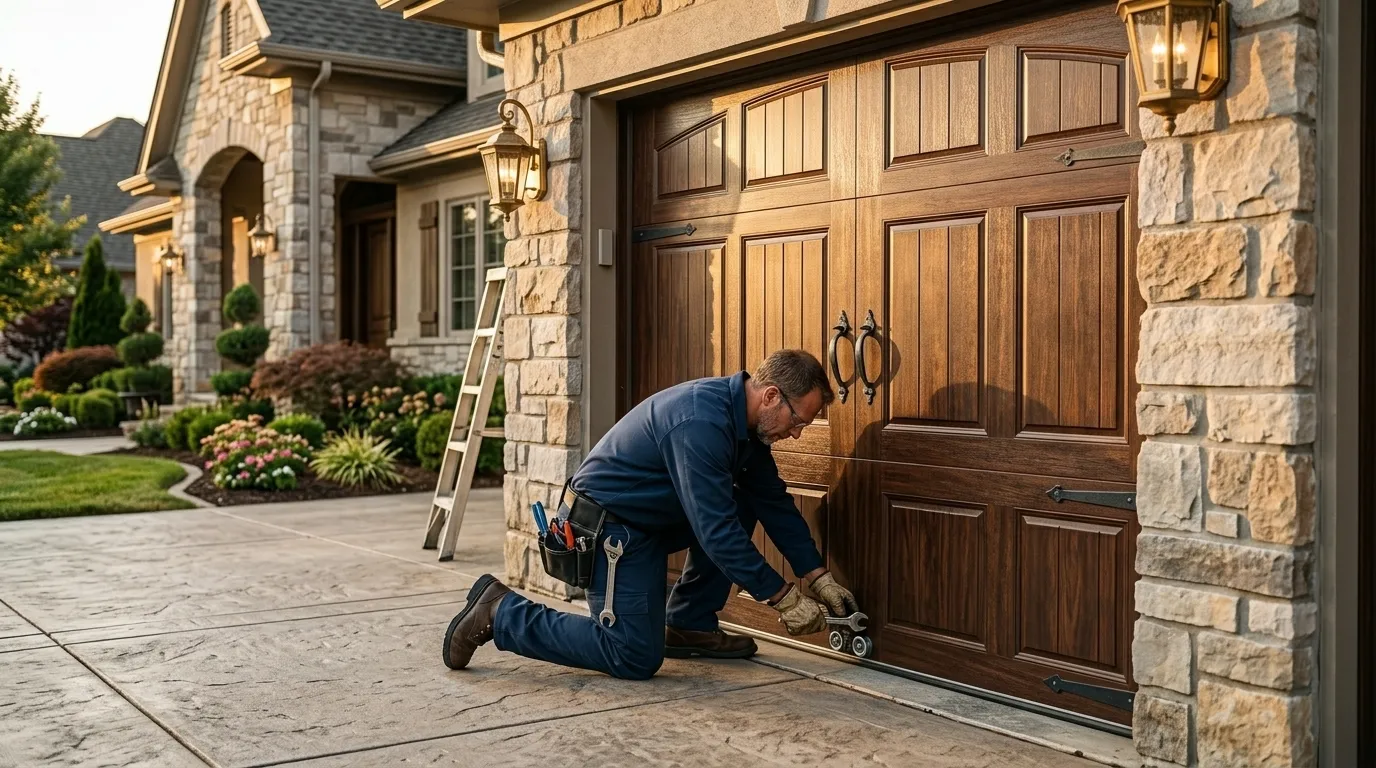
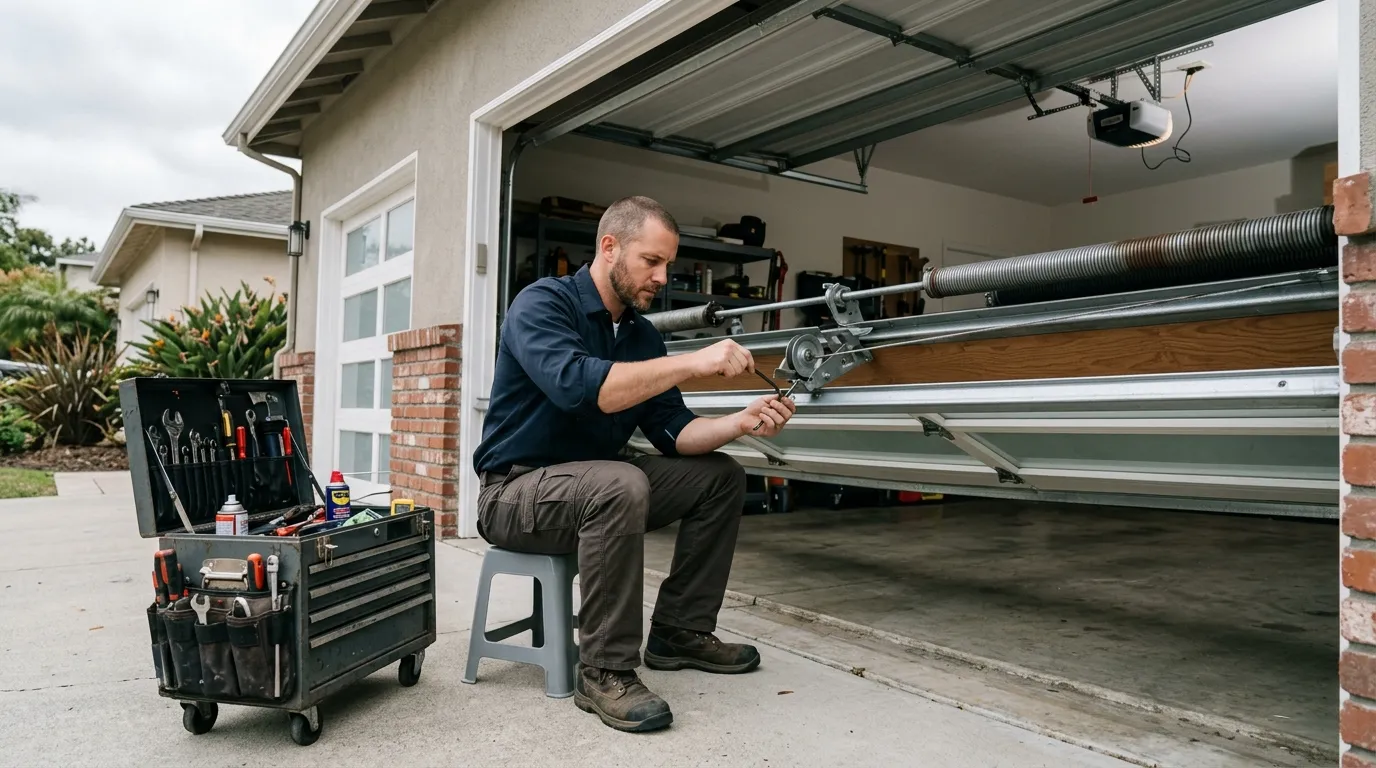
The failure we see most in Santa Paula isn't a dead opener, it's a torsion spring that's been carrying the door since the house was built. Santa Paula's housing stock centers on 1970, which puts a lot of these doors at the far end of a spring's working life without anyone ever having touched it.
A spring rated for a set number of cycles doesn't announce it's near the end. It just goes, usually on a cold morning when the steel is stiffest.
Second most common is track misalignment on the original steel jamb hardware from that era, which wasn't built to today's tolerances. We also see rollers that were never swapped from the factory-installed steel ones, which is fine until they start binding and putting side load on the opener's drive gear.
None of this is dramatic. It's slow wear on hardware that's been in place for five decades in a lot of these driveways, and it tends to fail all at once rather than gradually.
What You Pay
We don't have a set price to quote you here, and any number we gave without seeing the door would be a guess dressed up as a fact. What we can tell you is how the math tends to work in Santa Paula specifically: the area's median household income runs around $77,130, noticeably below the broader Thousand Oaks service area's median of $146,710. That gap matters for one reason - it changes which repairs are worth doing versus which door is worth replacing outright.
A tune-up on original 1970s-era hardware is usually the cheaper path if the door and track are still square. Once a panel is bent or the track is pulled from the jamb, patching it gets expensive fast and a full opener-and-hardware replacement often ends up costing less over five years than a string of service calls.
Time on the Job
We're not based in Santa Paula - the drive out is about 16 miles from our Thousand Oaks shop, so we schedule maintenance visits rather than treating them as walk-up work. That's worth knowing if you're calling because something feels off today rather than because it's failed outright: a maintenance visit is the right call while the door still opens, not after it's stuck halfway up.
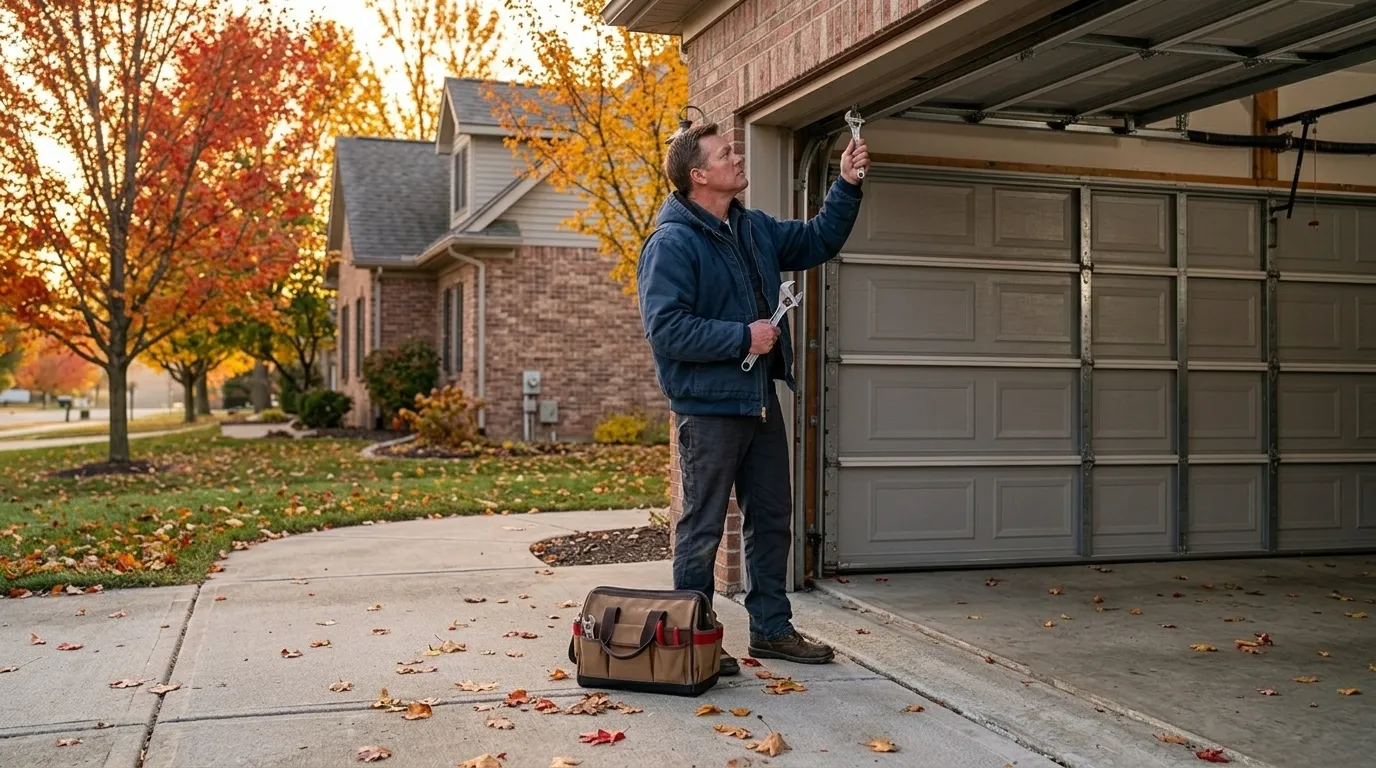
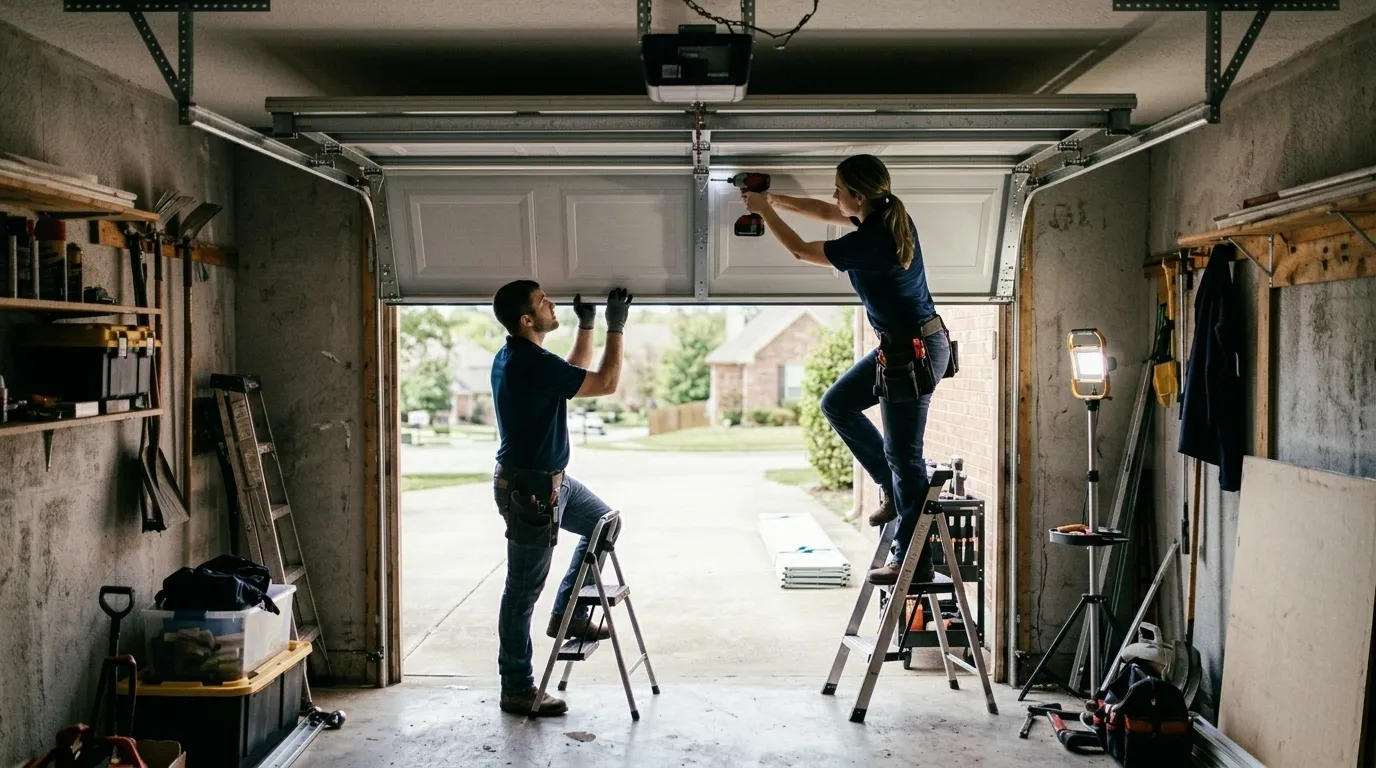
Once we're on site, a standard maintenance visit covers spring tension, track alignment, roller and hinge wear, and opener force settings, and most of that gets done in one visit without special-order parts. If the inspection turns up a spring or cable that's actually failed rather than just worn, that's a separate repair, and depending on the part, it may need a second trip if we don't have the right size on the truck that day.
What You Are Seeing
If your door is loud going up - a grinding or scraping rather than a smooth roll - that's usually the rollers, not the opener. If it shudders or hangs unevenly on one side partway through the cycle, that's more often the track pulling away from the jamb, which is common on houses from Santa Paula's 1970 building era where the original fasteners have loosened over the decades.
A door that closes most of the way and then reverses is the opener's safety sensors doing their job, but it can also mean the door itself has gone out of square and the opener is reading resistance as an obstruction. And if the door feels heavier than it used to when you lift it by hand with the opener disconnected, that's the spring losing tension - the clearest sign it's near the end of its cycle life and worth having looked at before it lets go under full load.
What Causes It Around Here
Santa Paula sits in the same mild temperate climate band as the rest of the service area, so this isn't a story about extreme heat or hard freezes wrecking hardware fast. It's a story about age. A door and its hardware installed around 1970, in a climate that isn't putting it through violent expansion and contraction, can go a long time without obvious damage - right up until the spring simply reaches its cycle limit or a fastener that's been slowly working loose for fifty years finally lets go.
The steady, moderate conditions here mean rust and warping are less of a driver than they'd be somewhere with hard winters or coastal salt air. What we're mostly dealing with is straightforward mechanical fatigue on original equipment that nobody's had a reason to think about until it stops working.
The DIY Question
Anything involving the torsion spring is not a DIY job - the spring on a standard door stores enough energy to cause a serious injury if it lets go while you're working near it, and that's true whether the door is five years old or fifty. Leave that to someone with the right bars and clamps.
What you can reasonably do yourself: keep the tracks free of dust and debris, check that the door is balanced by disconnecting the opener and lifting it by hand partway (it should hold position on its own), and listen for new noises. If you hear something new, that's the time to get it looked at, not after it fails. We'll say plainly that a tune-up won't fix a door that's already structurally out of square - at that point you're looking at hardware replacement, and we'd rather tell you that up front than run a service call that doesn't actually solve the problem.
Recent Work in Santa Paula
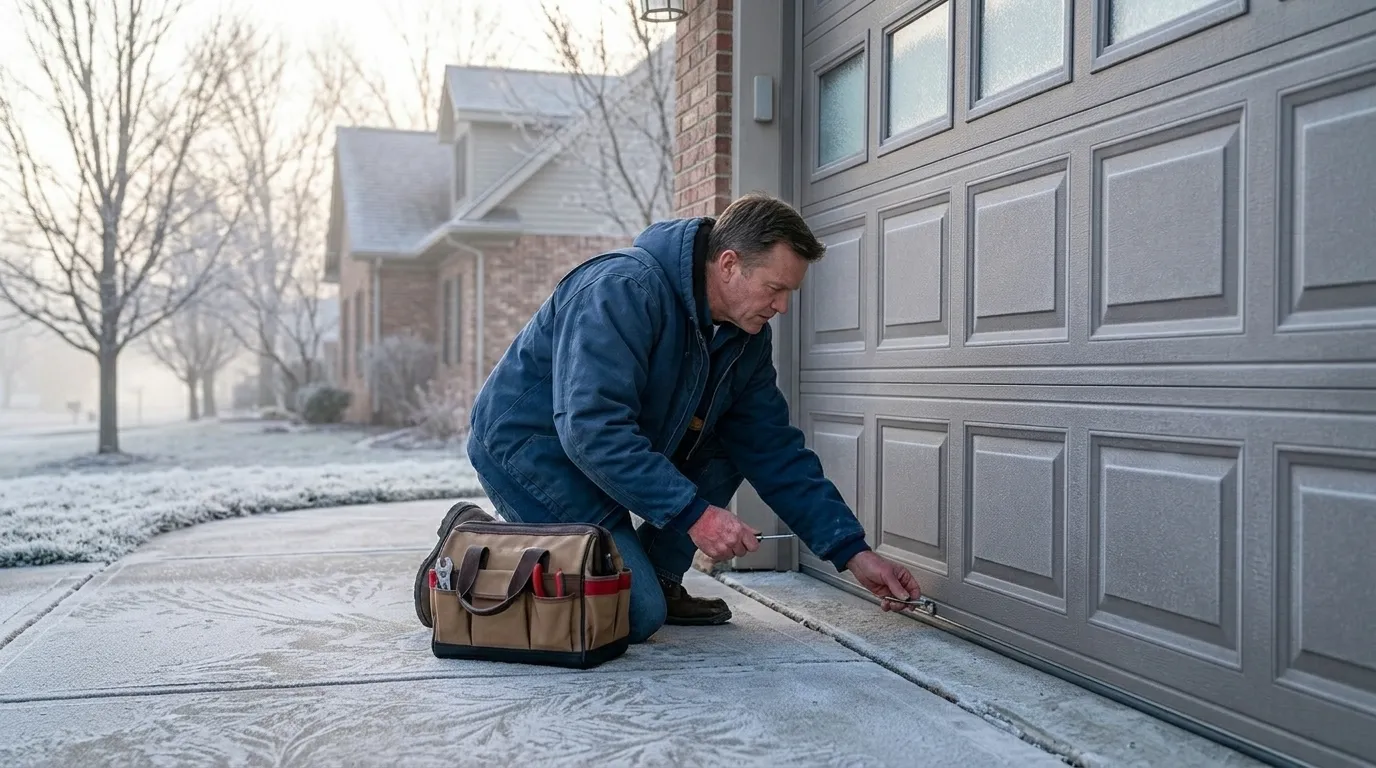
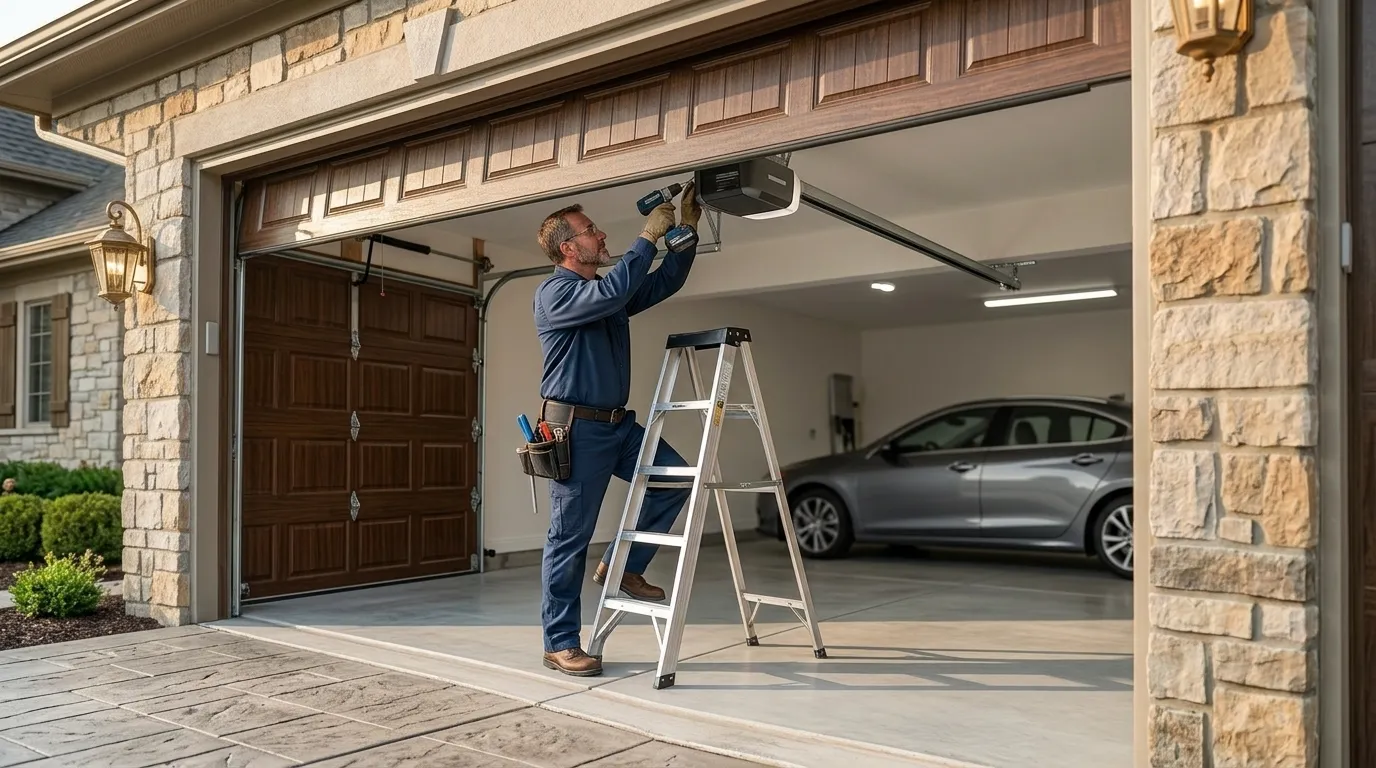
A look at jobs our crew has been on nearby.
Talk to a Santa Paula Technician First
Describe what the door is doing and get a straight answer on what it likely needs.
Why Santa Paula Calls Us
What Happens When You Call
-
1
Call or Request a Quote
Tell us what the door is doing and roughly how old the house is - that alone points us toward the likely part before a truck leaves.
-
2
On-Site Diagnosis
A tech checks the spring, cables, tracks, and opener in person and tells you plainly what is actually wrong.
-
3
Straight Price, No Surprises
You get a number before any work starts. It covers parts and labor, nothing added after the fact.
-
4
Fixed the Same Visit
Most repairs are done in one trip. If a part needs sourcing, we tell you that upfront instead of guessing.
Other Garage Door Services in Santa Paula
Frequently Asked Questions
How old is the average garage door in Santa Paula likely to be?
Most homes in Santa Paula were built around 1970, so if the door hasn't been replaced, its hardware is likely original or close to it. That's a long service life for a torsion spring, and it's the main reason we recommend a check before it fails rather than after.
Do you have a shop in Santa Paula?
No, we work out of Thousand Oaks and drive out to Santa Paula for scheduled visits, about 16 miles each way. We don't offer same-day walk-up service here, so maintenance and repair visits are booked ahead rather than treated as drop-ins.
Is it worth fixing an old door or replacing it?
It depends on what's actually worn. If the spring or rollers are the problem and the track is still square, a tune-up is usually the cheaper route. If the track's pulled from the jamb or a panel is bent, replacement often costs less over time than repeated repairs.
Can I service the torsion spring myself?
No. A torsion spring holds enough stored energy to cause serious injury if it releases while you're near it, regardless of the door's age. Balance checks and listening for new noise are fine to do yourself; spring work isn't.
Need Maintenance & Tune-Up in Santa Paula?
Call now for straight answers on cost and timing.