
Thousand Oaks Garage Door Guide
That Noise Your Garage Door Is Making, Explained
Most Thousand Oaks houses date to 1956-1997, and the mild climate here rules out ice and rare humidity swings as the cause of a squeal, grind, or bang.
- Licensed & Insured
- Same-Area Service Calls
- Upfront Pricing
Checking It Yourself
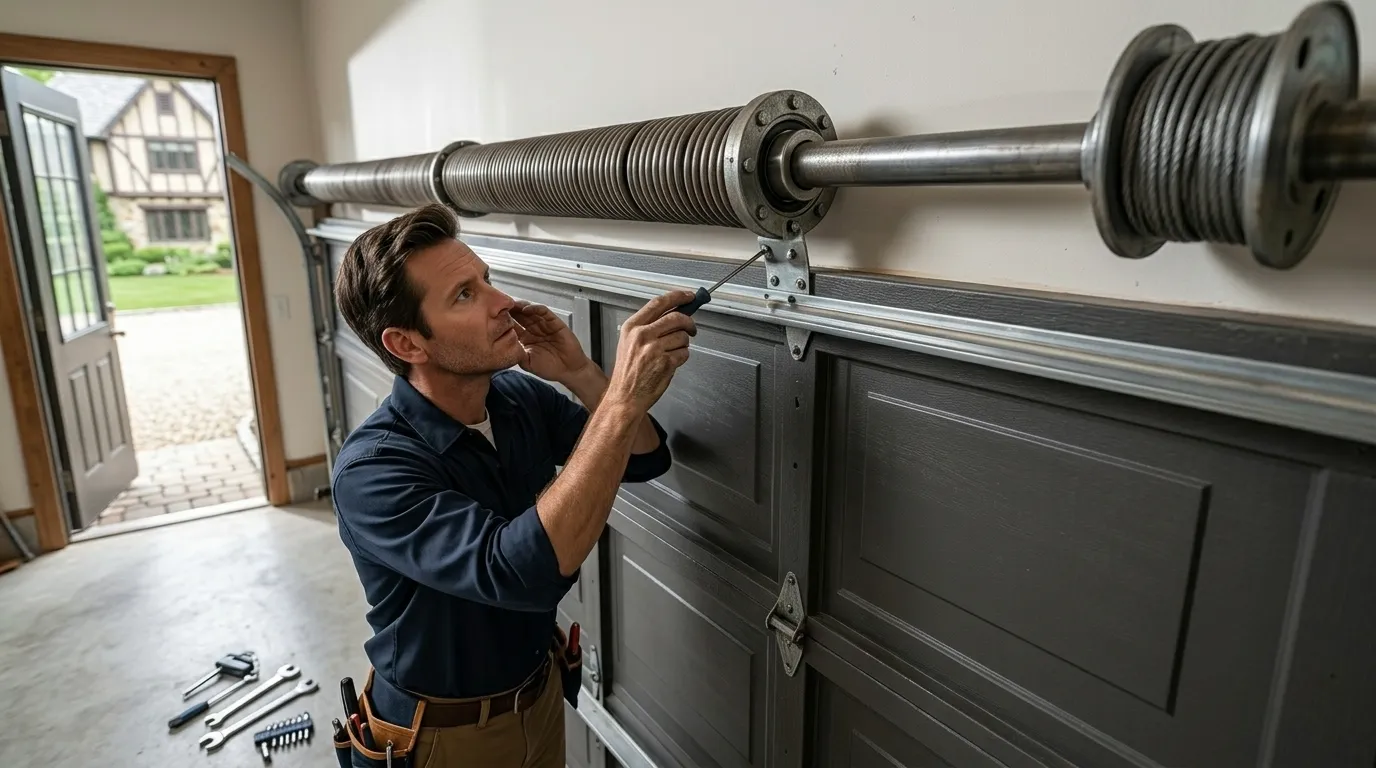
Stand next to the door and run it up and down once, listening instead of watching. A rhythmic thump every couple feet usually means a flat spot on a roller, and on houses built here between 1956 and 1997, that roller is often the original steel one nobody's replaced since the door went in. A sharp bang partway through the cycle is different - that's a cable jumping its drum, and it means stop using the door until someone looks at it.
Check the tension springs above the door too. If one coil looks stretched further than the other, or the door lists to one side when it's halfway open, that's a spring going out of balance, not a lubrication problem. Lubricant fixes squeaks.
It doesn't fix a spring, a bent track, or a stripped gear in the opener, and spraying WD-40 on those and hoping is how a small job turns into a bigger one. If the noise changes pitch depending on how hot or cold it is outside, note that - it matters more here than you'd think, and it's covered in the next section.
What the Weather Here Does to It
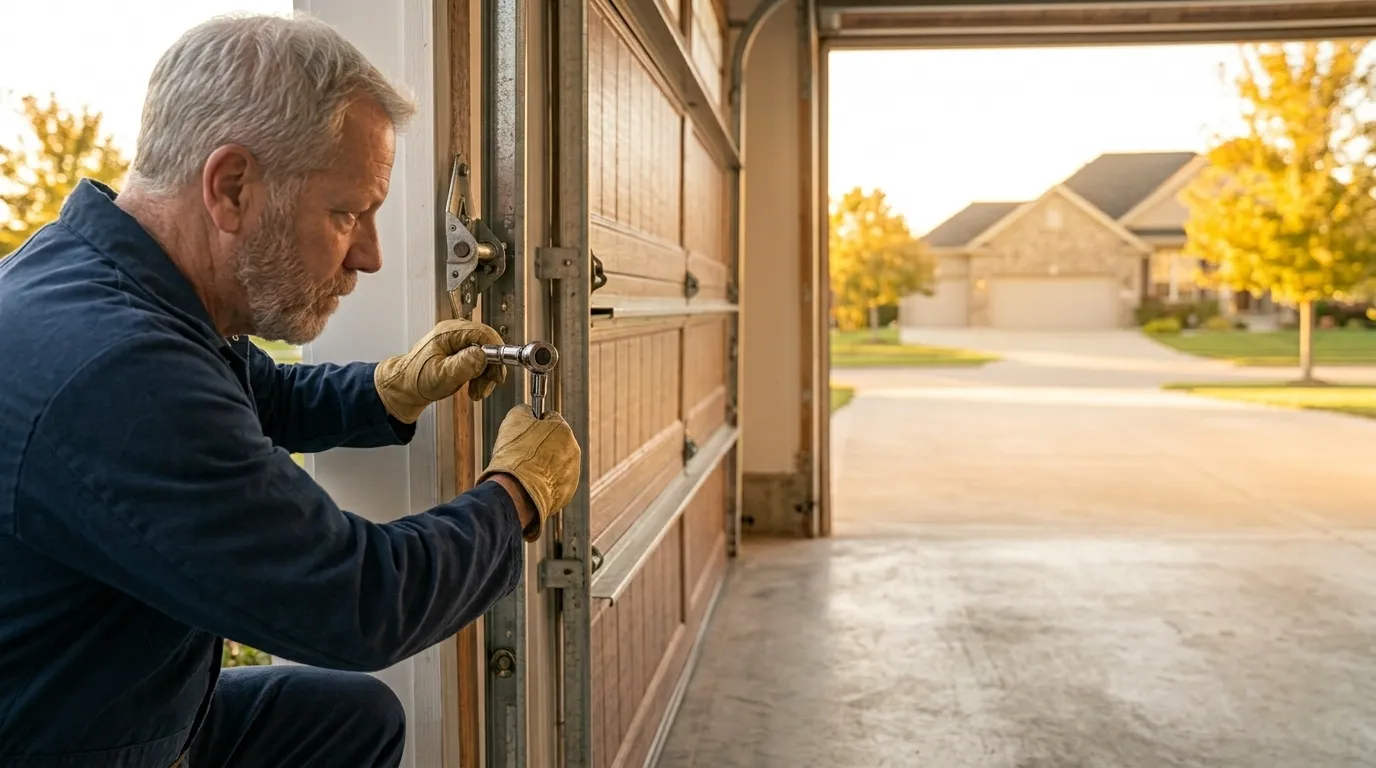
Thousand Oaks sits in a mild temperate band - no hard freezes, no sustained humidity extremes - which means we don't see the classic cold-climate failures like ice-cracked seals or a spring that snaps because grease went stiff overnight. That's the good news. The trade-off is that a lot of hardware here runs for decades without the kind of weather stress that would force an earlier repair, so when a spring finally does go, it's usually a spring that's been quietly aging since the Carter or Reagan administration, not one that failed early from abuse.
What mild weather doesn't prevent is UV and thermal cycling on rubber and nylon parts - the door seal along the bottom, the nylon idler bearings on some rollers, the bushings in the opener's drive gear. Those dry out and crack from sun exposure over years, independent of any storm. If your noise is a dry squeak that shows up mid-afternoon and quiets down by evening, that's more likely a heat-flexed part than anything mechanical going wrong all at once.
What Is Going On
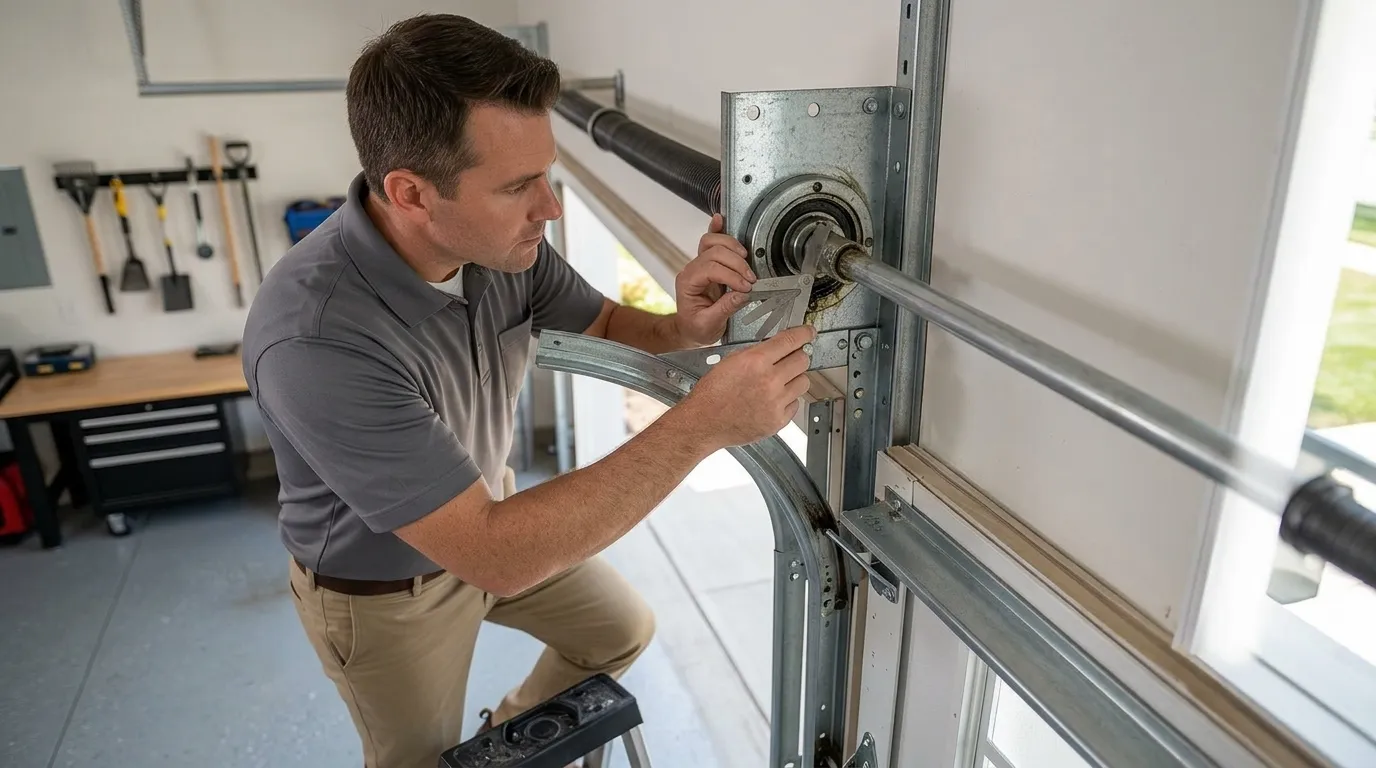
The service area runs across sixteen named communities, and the housing stock is heavily 1960s and 1970s construction, with the overall build window stretching from 1956 to 1997 and a median around 1976. That matters for noise diagnosis because doors and openers installed in that era, or replaced once in the decades since, are now old enough that original springs, rollers, and drums are past their rated cycle count on a lot of these houses - not because anyone neglected them, but because that's just where the math lands after 40-plus years.
A grinding sound from the opener head, as opposed to the door itself, points to the motor's gear set - a known wear point on units that age. A rattling track usually means the mounting brackets have worked loose over years of use, which is common but not urgent.
The one thing I won't do is tell you a noise is 'nothing' over the phone. Some of these sound similar and aren't; a spring under tension is not something to guess about.
What You Pay
I don't have a flat number to give you here, because a roller swap and a broken spring on a double door are not the same job, and I'm not going to invent a price to fill space. What I can tell you is that the area this business serves - nearly 59,000 households, about half of them owner-occupied houses, with a median household income around $146,710 - is a market where most people want the job done right the first time rather than the cheapest patch, and that shapes how the work gets quoted: diagnosis first, then a real number for your door, not a generic range that doesn't match what's actually wrong.
How We Can Help
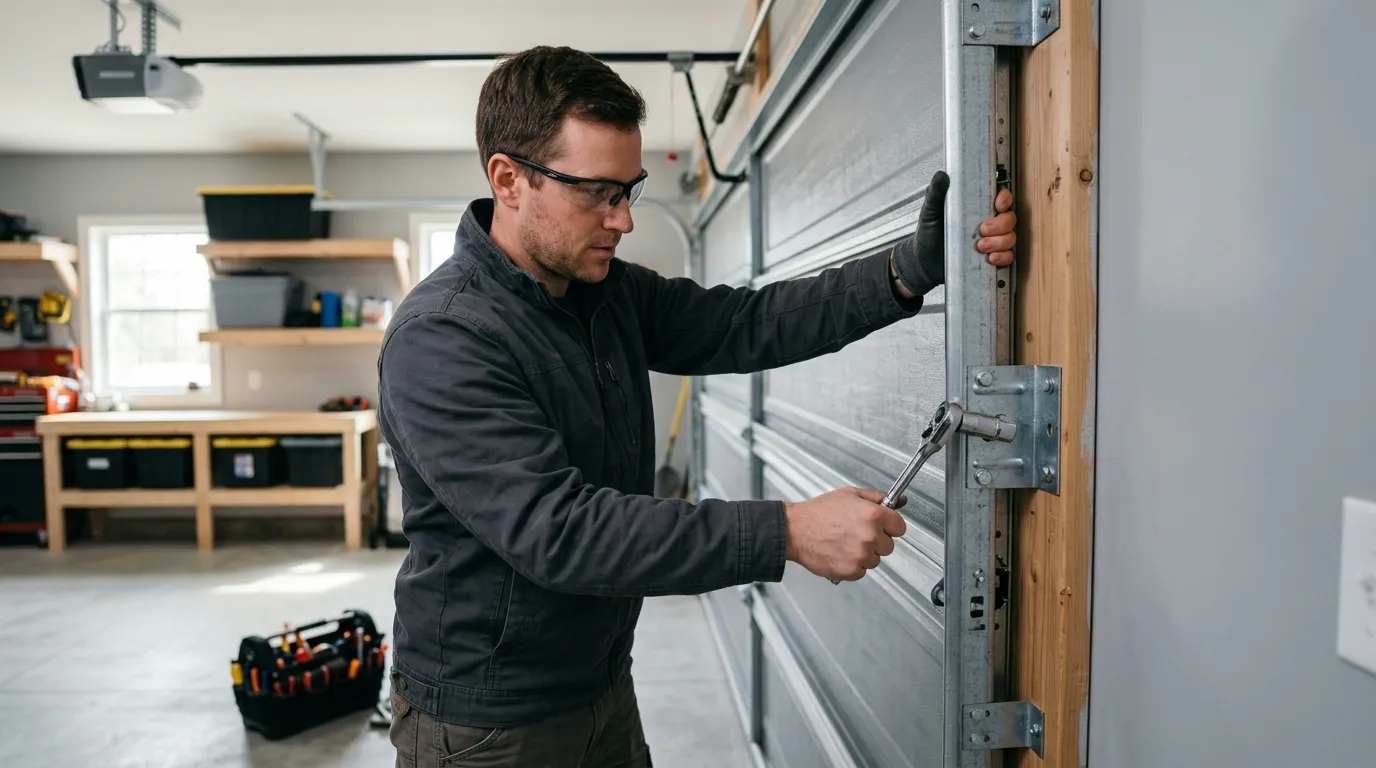
Garage Door Repair
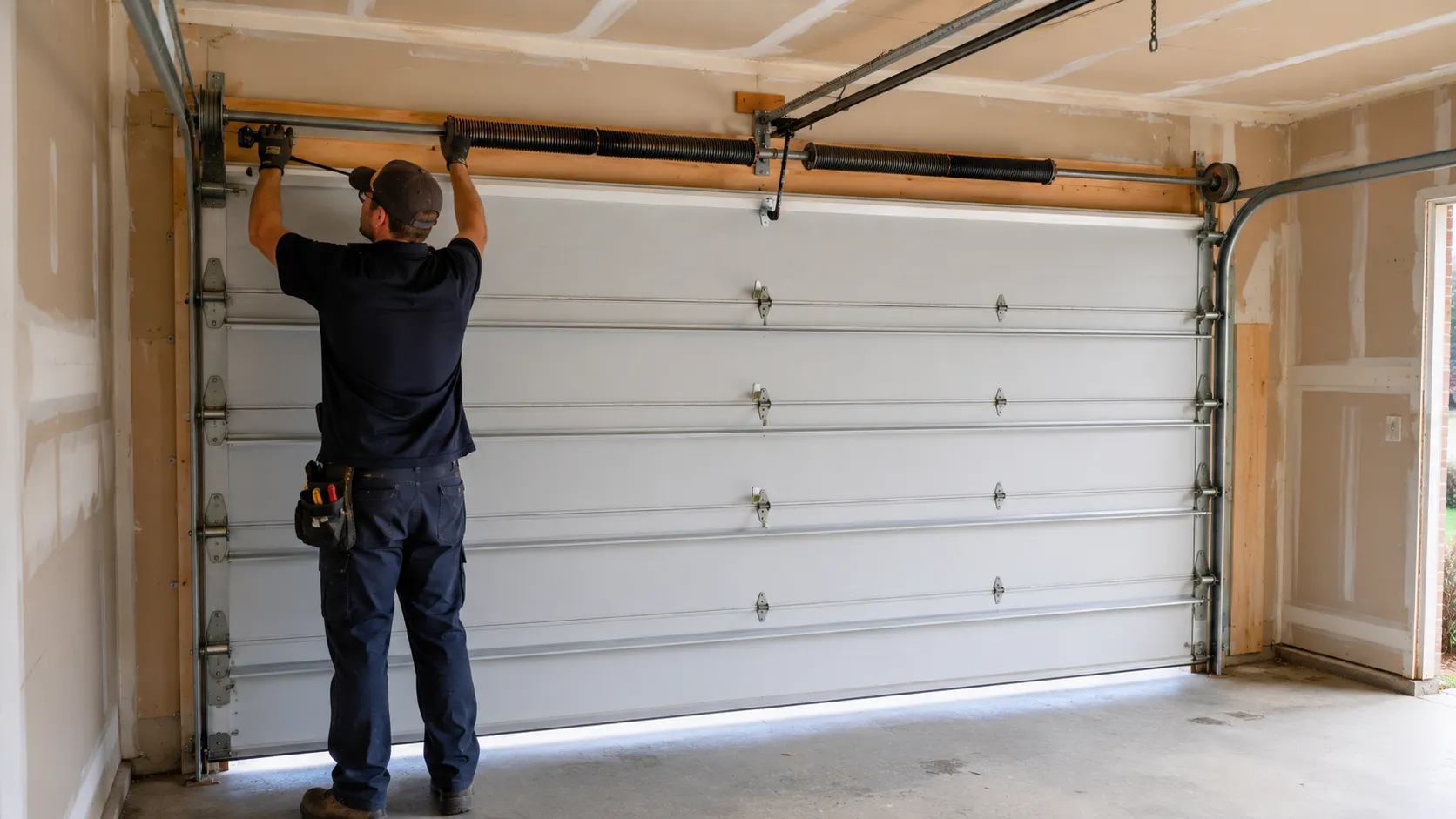
Springs, cables, tracks, rollers, and openers fixed by a tech who explains the problem before touching anything.
Learn more →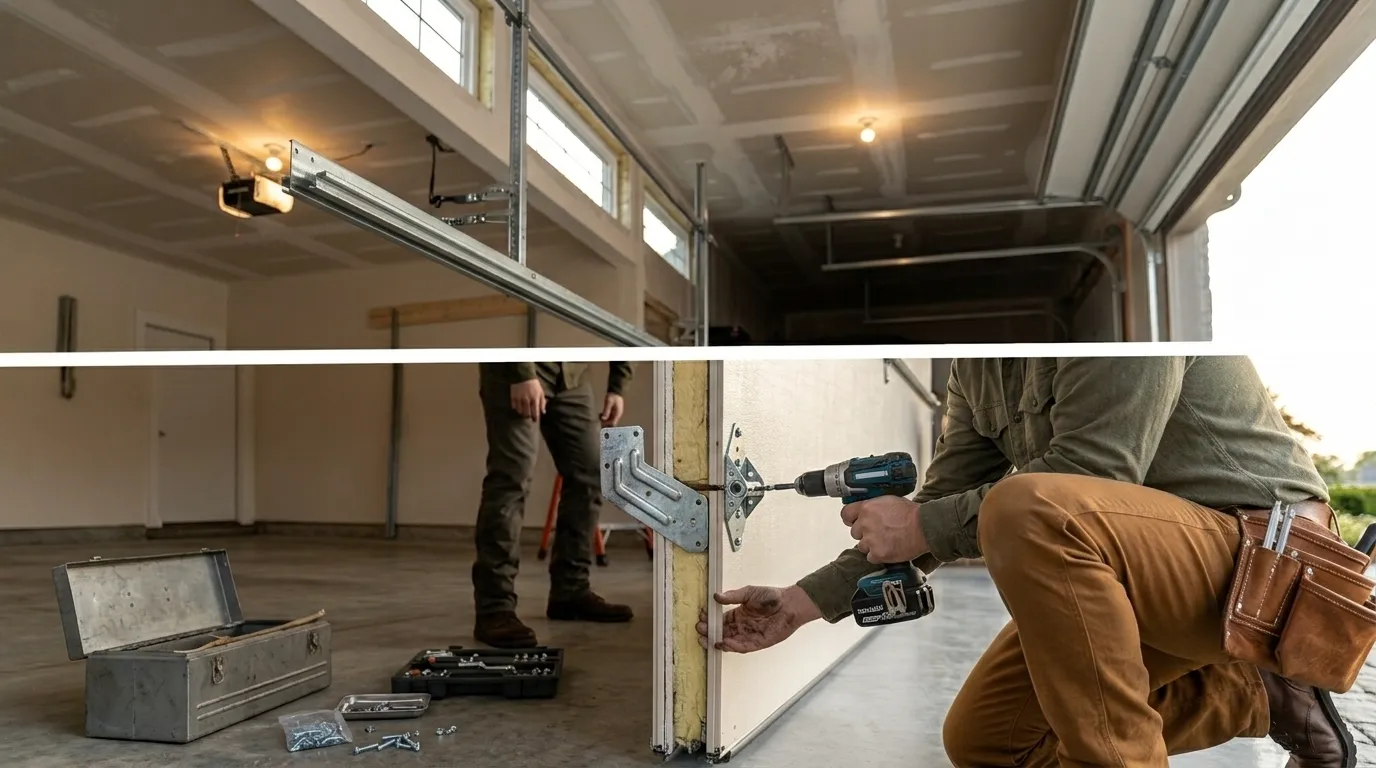
Garage Door Installation
New sectional doors sized and installed for the housing stock actually built in this area.
Learn more →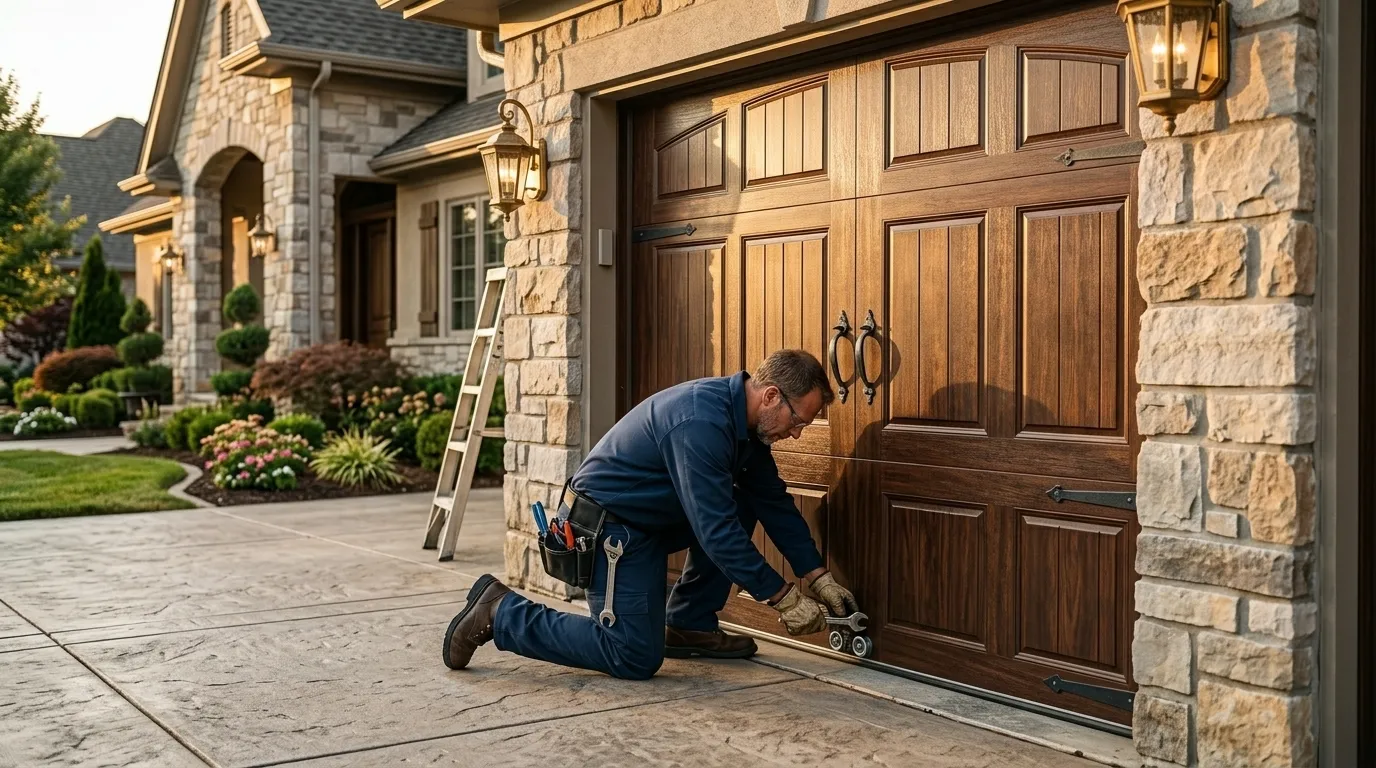
Garage Door Service
Tune-ups, lubrication, and safety checks that catch a small problem before it becomes a service call.
Learn more →Frequently Asked Questions
Why does my garage door squeal only in the afternoon?
Heat. Nylon rollers and rubber seals flex and dry out under sun exposure, and in this mild climate that's a bigger factor over time than cold ever is. The squeal usually eases once the metal and plastic parts cool back down in the evening, but it's a sign those parts are aging, not something to ignore indefinitely.
Is a grinding noise from the motor serious?
It can be. Grinding from the opener head, not the door track, often means the internal gear set is wearing out - a common failure point once an opener's been running for a couple decades. It won't strand your car overnight, but it usually gets worse, not better, and gear kits aren't always a quick-turnaround part.
My door bangs loudly once during the cycle. What is that?
That's very likely a cable that's jumped its drum or a spring losing tension unevenly. Stop using the opener until it's checked - a door with an unbalanced spring can drop unexpectedly, and that's a safety issue, not just a noise issue.
Do I need to replace the whole door or just fix the noise?
Depends on the part. A roller or cable issue is a repair. If the door itself is original to a house built in the 1960s or 70s, though, the panels and hardware may be near the end of their practical life, and at that point a repair is a stopgap rather than a fix.
Have a Door That Needs a Second Opinion?
Call and describe what it is doing - we will tell you what it likely is.