
Thousand Oaks Garage Door Guide
When the Power Goes Out and the Opener Won't Move
A guide for Thousand Oaks homeowners on garage door openers and power outages, tied to the area's 1960s-90s housing stock and mild climate conditions.
- Licensed & Insured
- Same-Area Service Calls
- Upfront Pricing
Checking It Yourself
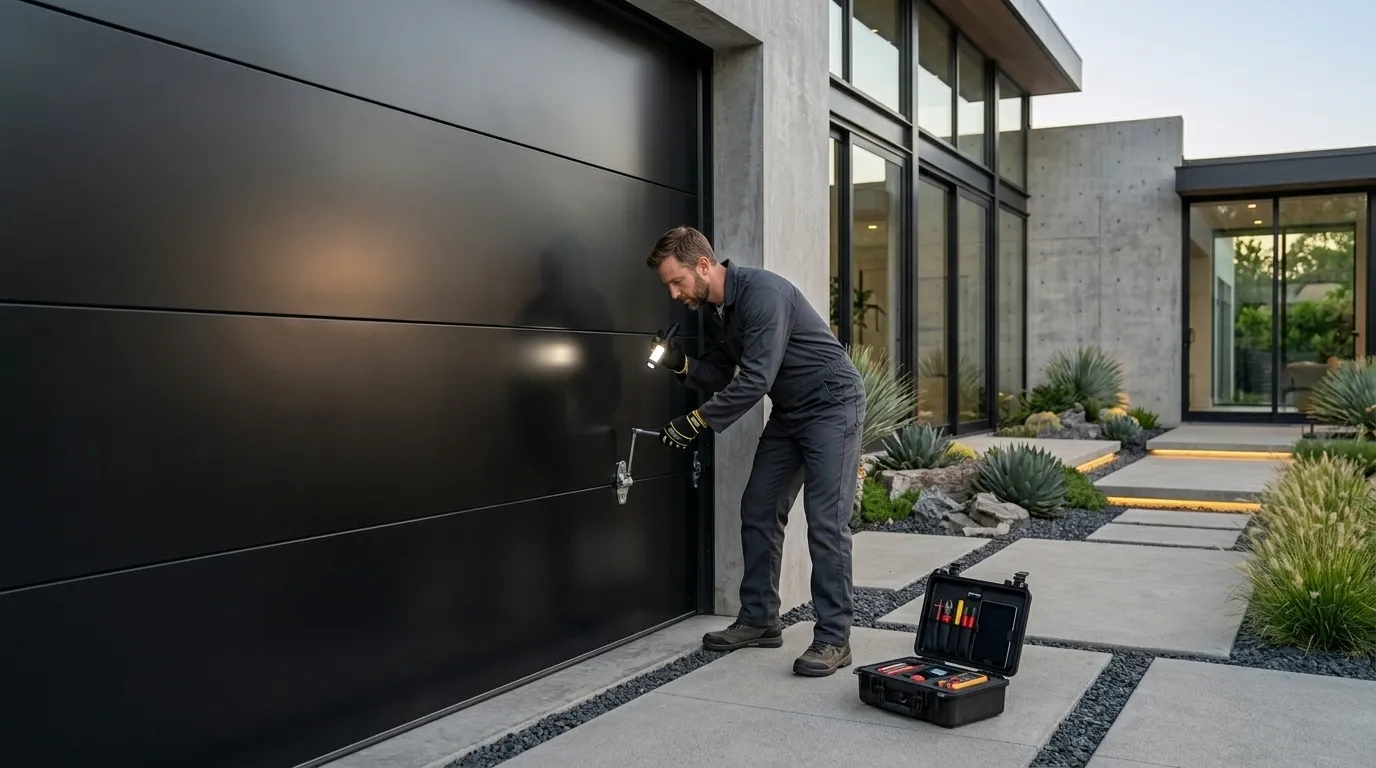
Before you call anyone, find the manual release cord hanging from the trolley on the opener rail - it's usually a red handle. Pull it down and back toward the motor to disengage the carriage from the door. Once it's disengaged, try lifting the door by hand.
If it moves smoothly and stays up on its own around waist height, the springs are fine and the problem is the opener or the power. If it's heavy, jerks, or won't stay up, stop - that's a spring problem, not a power problem, and forcing it can hurt you.
A lot of homes across this service area, from the older tracts near Newbury Park to the neighborhoods pushing toward Oak Park, were built between 1956 and 1997, with most going up in the 1976 range. That means a wide mix of opener ages and mounting styles out there - chain drives bolted to hardware that's been replaced once or twice, and newer belt drives on the same rail brackets from decades ago.
Check the wall control panel too. If its light is dead, the issue is upstream of the opener itself, likely a breaker or the outlet the unit plugs into, not the motor.
One limitation: we can walk you through this over the phone, but if the release cord is out of reach or the door is a heavy insulated model, don't climb for it. That's a job for a call, not a stepladder.
What the Weather Here Does to It
This area sits in a mild temperate band - no deep freezes, no monsoon season pounding tracks with debris. That's a real advantage over harsher climates where openers get replaced early because of moisture in the gearbox or ice locking up the rail. Here, openers tend to fail from age and use cycles more than weather damage, which is part of why you'll still find original units in some of the older sections of town dating back toward that 1976 median build year.
What the mild climate doesn't save you from is heat cycling on plastic gears inside older chain-drive units, especially through the hotter stretches of summer when garages here can sit well above outside temperature. Repeated heat swelling and cooling is a slow wear pattern, not a dramatic one, and it's often what's behind an opener that strains, reverses randomly, or grinds before it finally quits. Power cuts themselves aren't a weather-driven event here the way they are in areas with regular storms - when the power goes out locally, it's more often a grid issue than a downed line from wind or ice.
What Is Going On
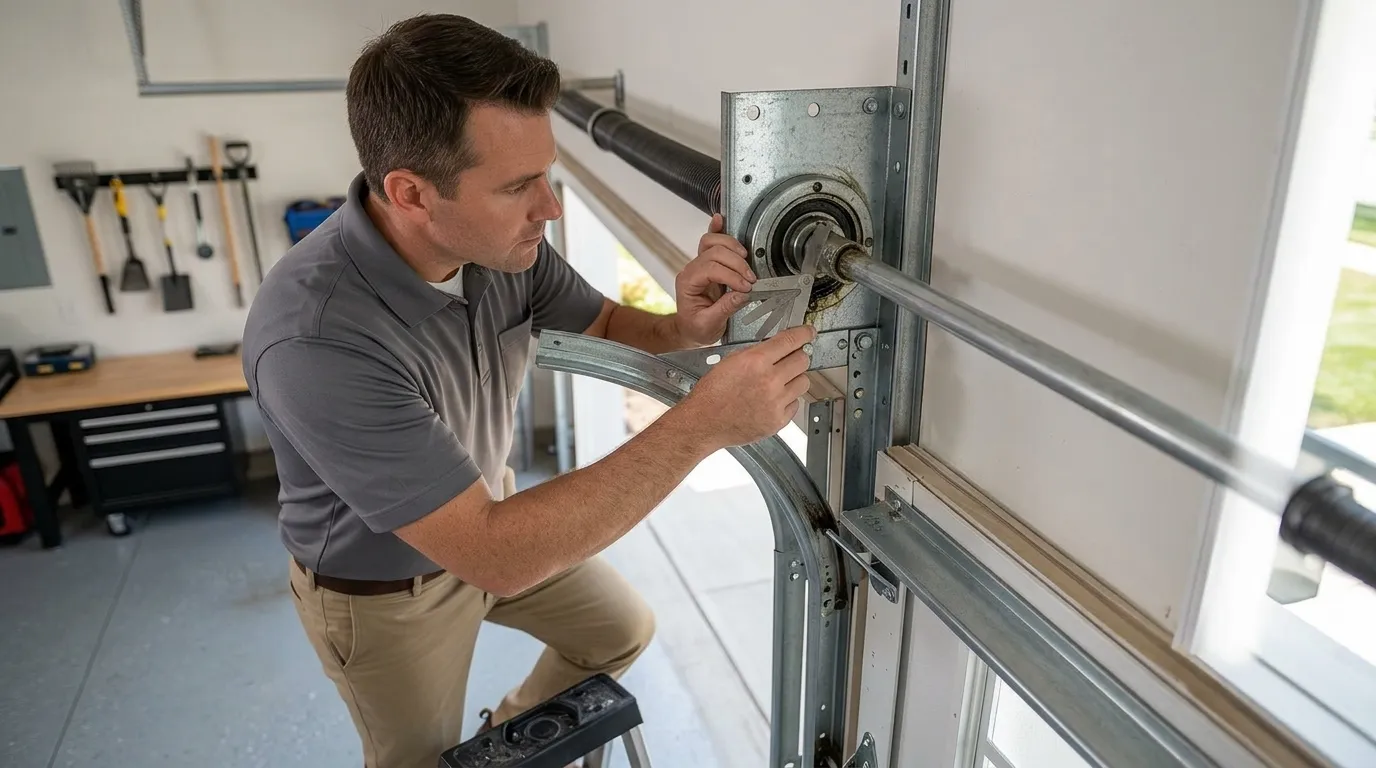
When an opener won't respond and the lights in the house are on, the usual suspects are the wall outlet, a tripped breaker, or a dead capacitor inside the unit itself. Capacitors fail with age, and given how much of the housing stock here traces back to the 1960s-70s stretch that F2 describes, a fair number of these openers are well past the age where that part gives out.
If the power is actually out - a real utility outage - the opener has no backup unless a battery backup module was installed on it, and most original units from that era never had one. That's when the manual release becomes the only way in or out until power's restored. Some newer opener models sold today include battery backup as standard, which is worth asking about if you're due for a replacement anyway rather than a repair.
We don't stock every gearbox or logic board for every brand and vintage of opener still running in homes around here - parts availability depends on the manufacturer and how old the unit is, and sometimes a board is genuinely not worth sourcing on a unit already near the end of its life.
What You Pay
We don't have a set price list to hand you here, and honestly, opener repair costs swing a lot depending on whether it's a capacitor, a logic board, a gear set, or the whole unit. What we can tell you is that with median household income in this service area at $146,710 and roughly 29,391 owner-occupied houses among 58,984 households, replacement openers with modern safety features and battery backup are well within reach for most households here, and often make more financial sense than chasing parts for a 20-plus-year-old unit.
Get a technician out to look at the actual opener before deciding. A quick phone diagnosis can rule out an obvious outlet or breaker issue, but telling you a repair cost without seeing the unit and its age isn't something we're going to guess at.
How We Can Help
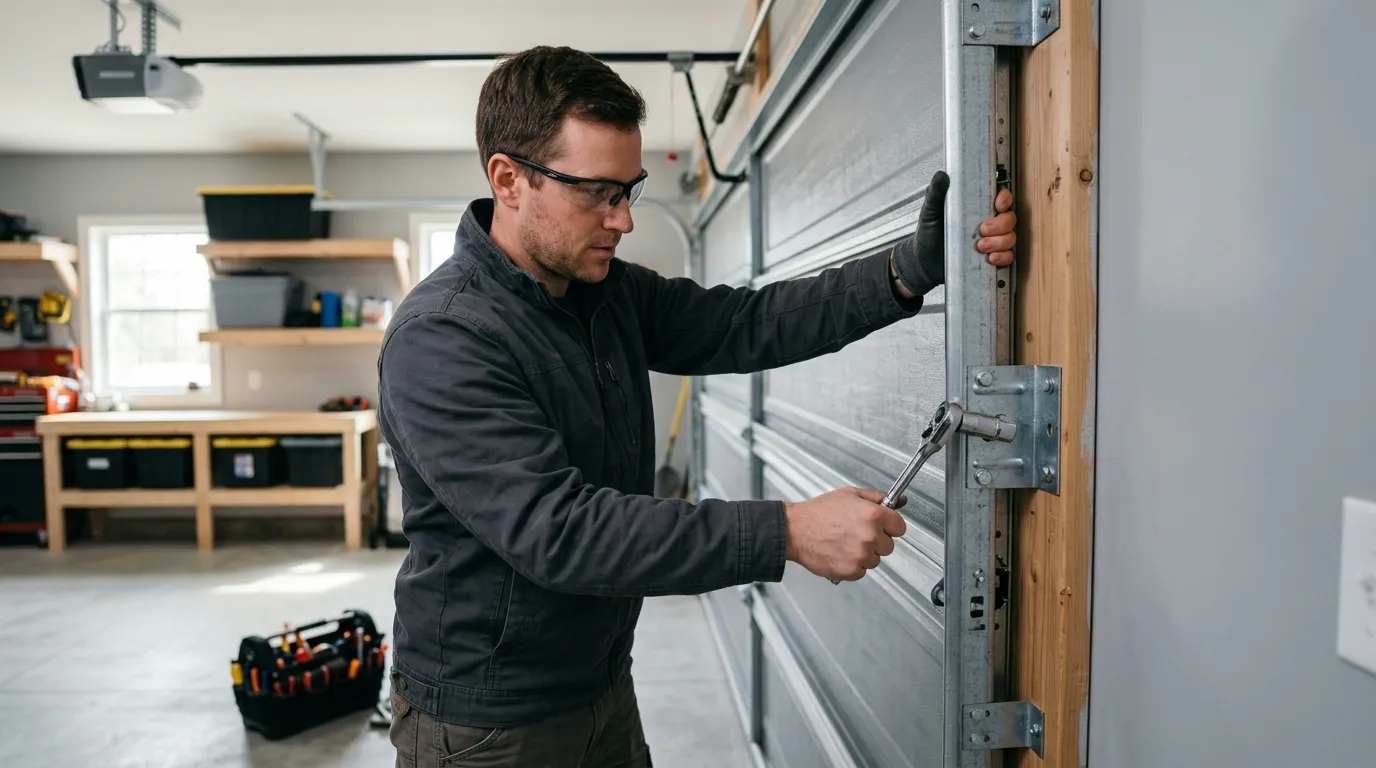
Garage Door Repair
Springs, cables, tracks, rollers, and openers fixed by a tech who explains the problem before touching anything.
Learn more →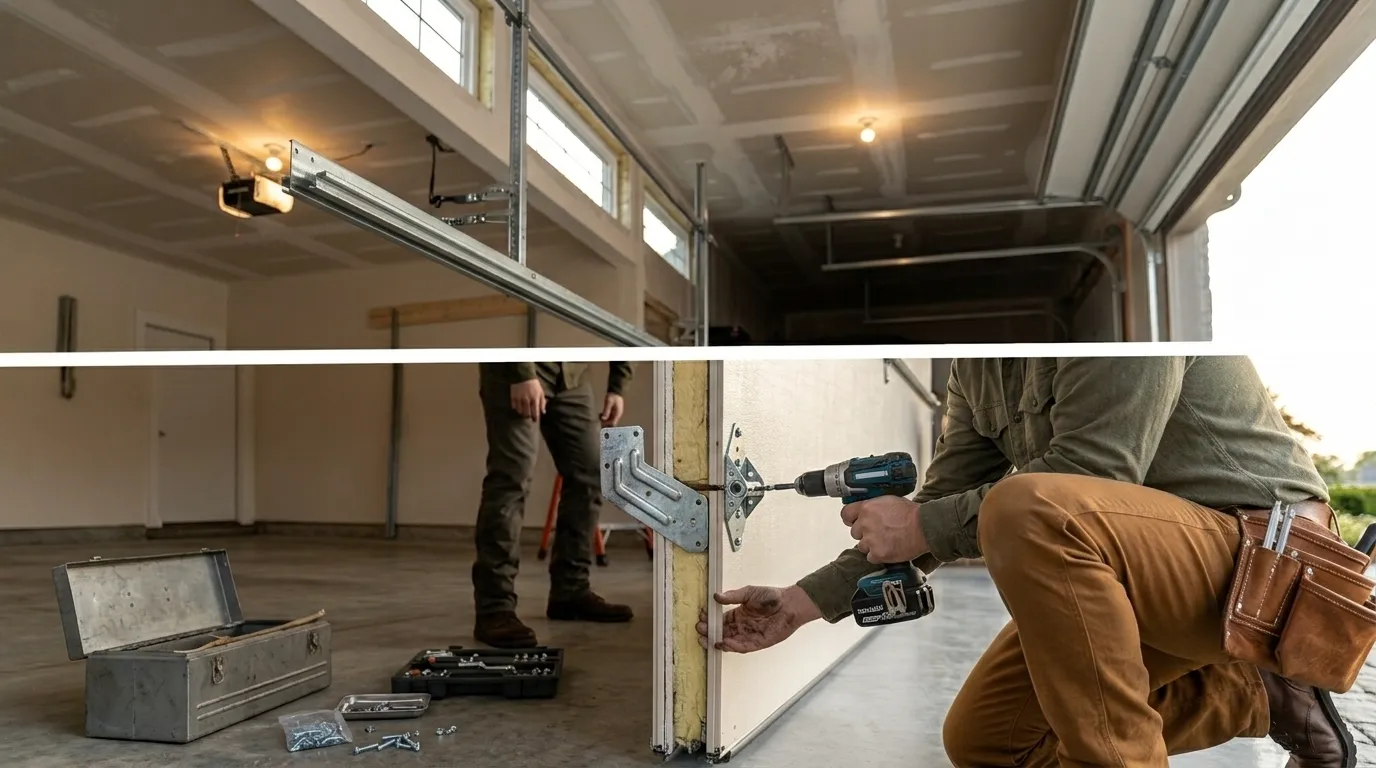
Garage Door Installation
New sectional doors sized and installed for the housing stock actually built in this area.
Learn more →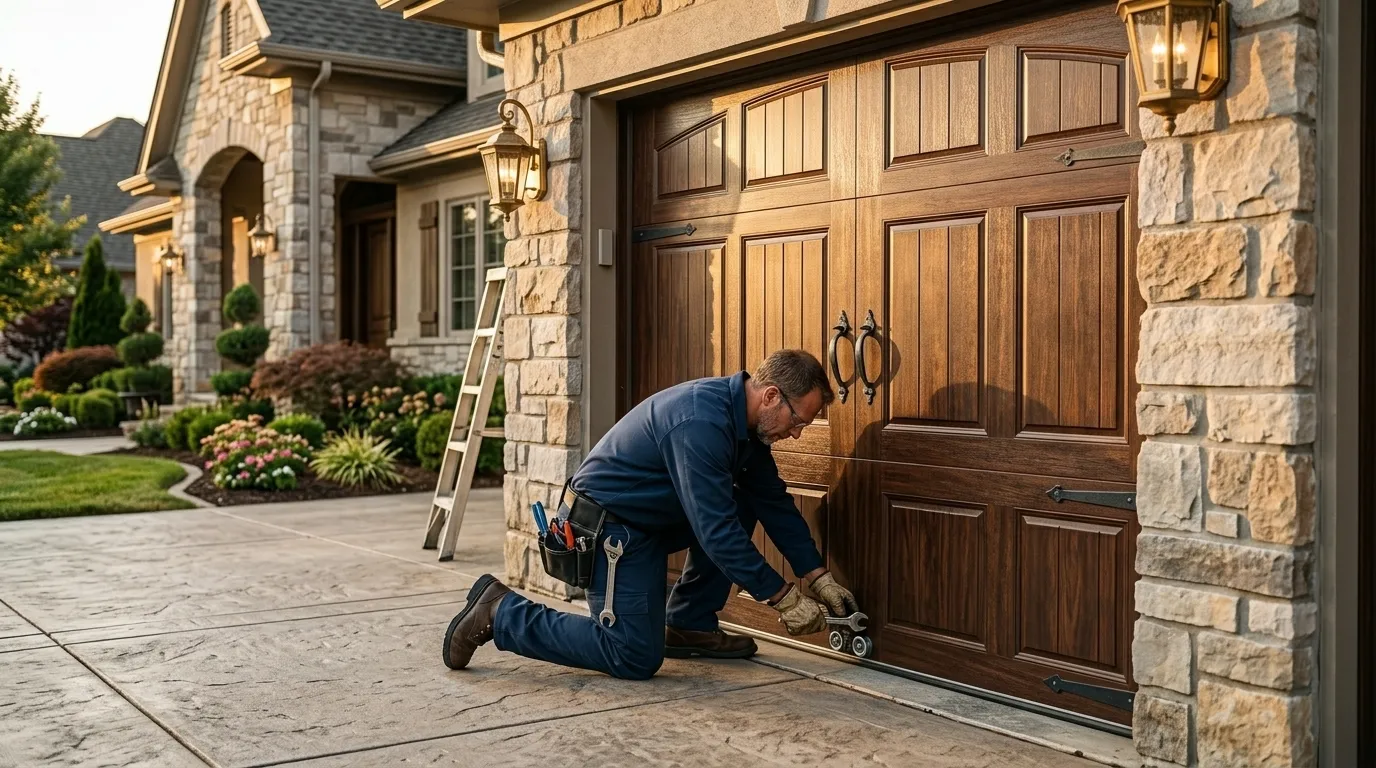
Garage Door Service
Tune-ups, lubrication, and safety checks that catch a small problem before it becomes a service call.
Learn more →Frequently Asked Questions
My garage door opener light is on but the door won't move. What's wrong?
That usually points to the motor, gears, or a safety sensor rather than a power problem, since the unit clearly has power. Check that the two safety sensors near the floor on each side of the track are aligned and their lights are steady, not blinking. If they're fine, it's likely internal to the opener.
How do I open my garage door during a power outage?
Find the manual release cord (usually red) hanging from the trolley on the opener rail, pull it down and toward the motor to disengage the door from the opener, then lift the door by hand. Reconnect the trolley to the carriage once power's back by pulling the cord again or using the switch on the opener.
Is my opener too old to keep repairing?
If it dates back near the 1976 median build year for houses in this area and it's a chain-drive without battery backup, replacement often costs less over time than sourcing parts for it. We can look at the specific unit and tell you honestly whether it's worth fixing.
Have a Door That Needs a Second Opinion?
Call and describe what it is doing - we will tell you what it likely is.