
Thousand Oaks Garage Door Guide
Why a Garage Door Goes Off Track Here
A look at why garage doors go off track in Thousand Oaks homes, tied to the area's 1956-1997 housing stock and mild coastal-valley climate.
- Licensed & Insured
- Same-Area Service Calls
- Upfront Pricing
Checking It Yourself
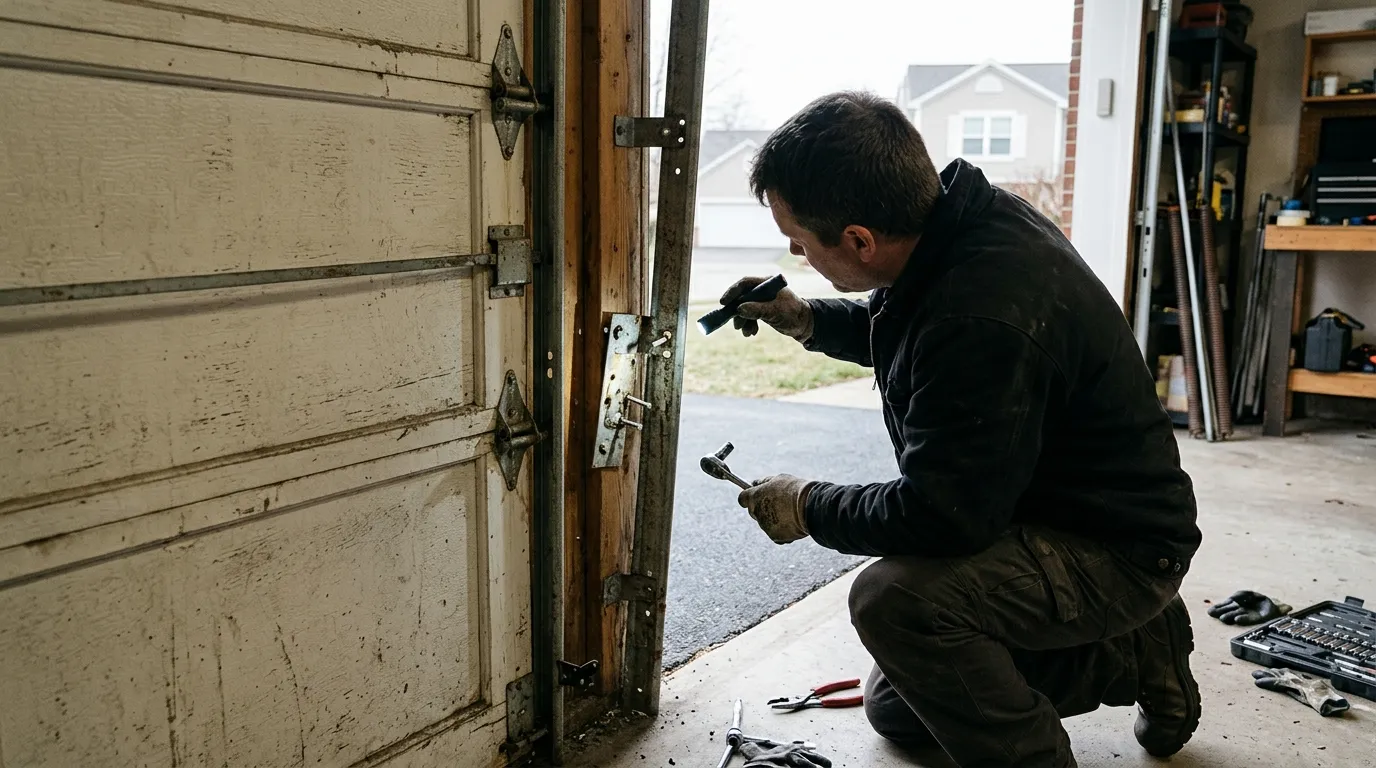
Before you call anyone, look at the tracks on both sides of the door. Stand the door halfway up and check the gap between each roller and its track - if one side has visibly more daylight than the other, or the door looks tilted when it's down, that's an off-track door, not just a noisy one.
Most houses in this service area went up between 1956 and 1997, with a lot of that stock dating to the 1960s and 70s across the sixteen named areas we cover. That matters here because a door built in that window is old enough that the track brackets have been drilled, redrilled, and sometimes just bent back into place by whoever worked on it last. Look at the bracket screws - if they're stripped or the wood behind them is chewed up, the track has been walked loose before and will walk loose again.
Don't force the door with the opener if it looks crooked. Running a motor against a bound or bent track is how a track that's slightly off becomes a track that's sprung, and how a roller that's rattling becomes a roller that's snapped a stile. If the door won't move square, pull the release cord and move it by hand, carefully, or leave it where it sits.
What the Weather Here Does to It
This is a mild temperate climate - no deep freeze, no monsoon season, nothing that swings hardware through big extremes in a single week. That's the good news: you're not fighting the kind of ice-and-thaw cycle that snaps brackets in colder regions.
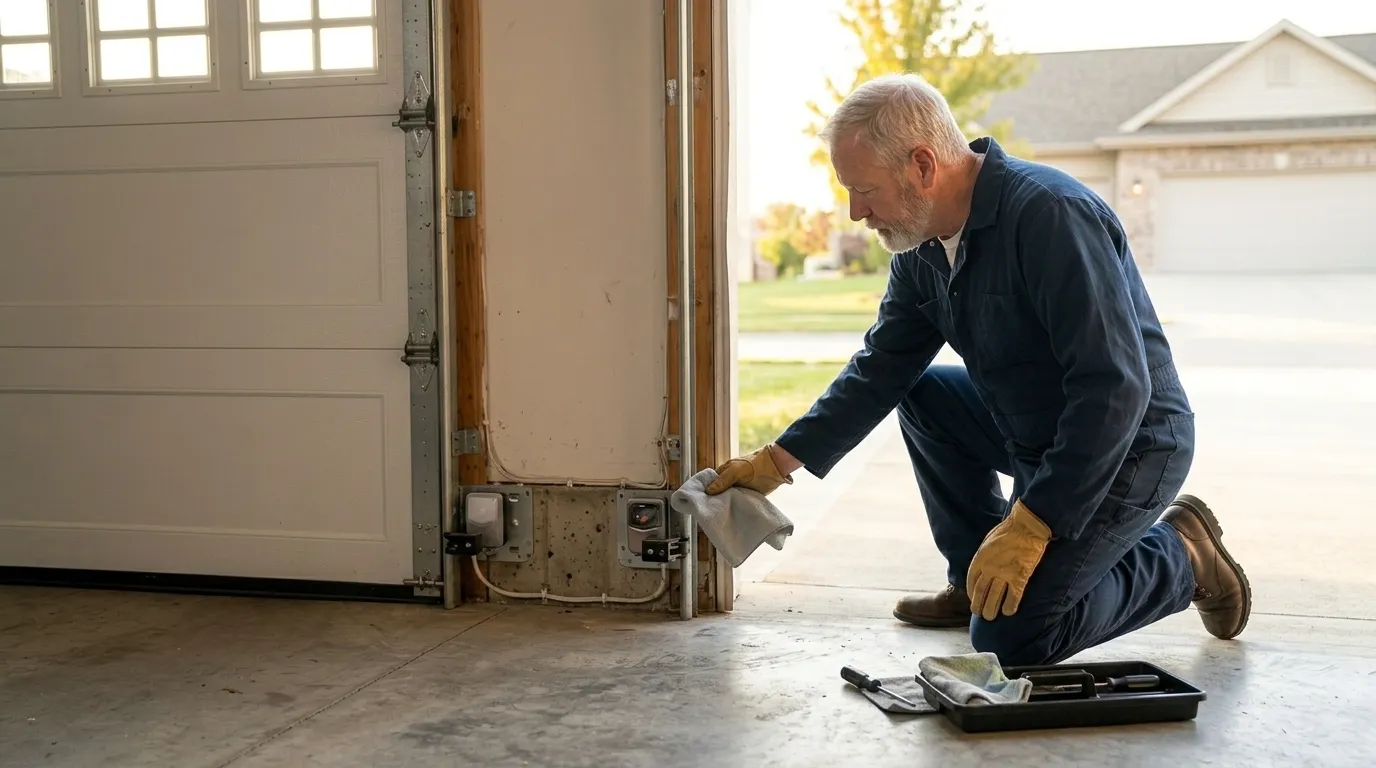
The less obvious effect of a mild climate is that hardware here doesn't get retired by weather, it gets retired by decades of daily temperature swing and dry heat cycling the same lubricant and the same steel year after year. A track bracket that would get inspected and replaced after a hard winter somewhere else just quietly loosens here, one thermal expansion cycle at a time, until a bump - a car mirror, a kid's bike, a gust catching the door mid-cycle - is enough to walk it off the wall.
So the failure pattern in this climate band tends to be slow and mechanical rather than sudden and weather-driven: a bracket backs out a sixteenth of an inch at a time until the track's alignment is off by enough to catch a roller. It's not a storm doing it. It's just time, on a door nobody's looked at since it was installed.
What Is Going On
On a lot of the doors we see, the root cause is original hardware from a house built in that 1956-1997 window - median year around 1976 - carrying decades of small adjustments nobody wrote down. A bent track section, a bracket with the wrong screws in it, a roller that was swapped for a slightly different size at some point: any one of those throws the door's path out of true.
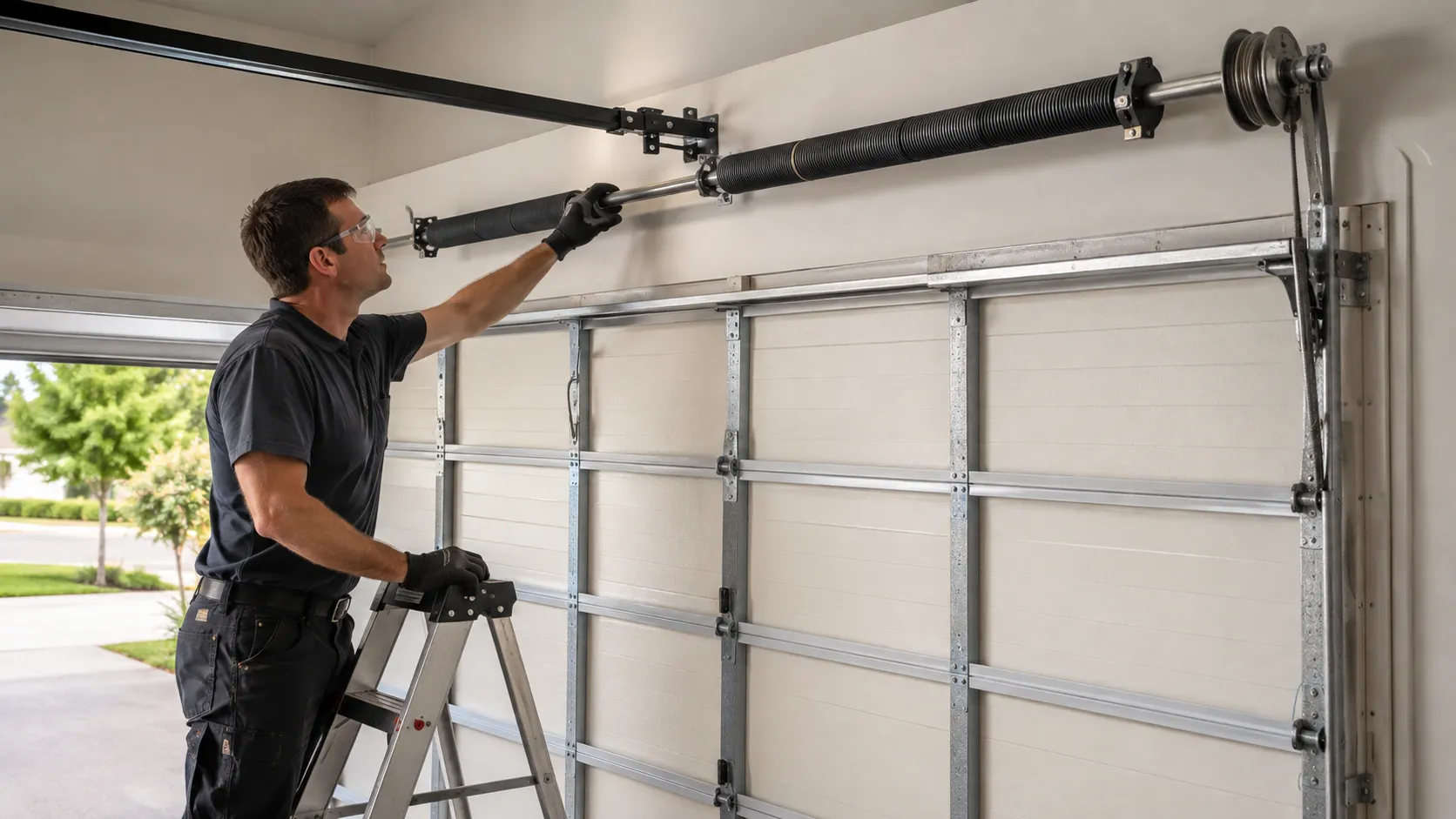
The other common cause is a broken cable or a spring that's lost tension unevenly. When one side of the door loses lift and the other side doesn't, the door racks sideways as it travels, and the rollers on the low side get forced against the edge of the track instead of running down the middle of it. That's not a track problem at all - it's a spring or cable problem showing up as a track symptom, and fixing the track without fixing the spring just means it happens again in a few weeks.
Sometimes it's simpler: the vertical track section has worked loose from the wall stud behind it, and the whole track is hanging a few degrees off plumb. On a house from this era, wall framing and shim gaps aren't always what a new build would give you, so a track that was set close but not exact in 1976 has had a long time to drift further.
What You Pay
We don't have a flat number to give you here, because what a track repair costs depends on whether it's a bent track section, a bracket that needs new fasteners into solid framing, or a cable and spring job that's been masquerading as a track problem. Those are different repairs with different parts and different time on the job.
What we can tell you honestly: if the track is bent in more than one place, or the door has come off the rollers entirely and dropped, replacing that section of track is usually a better call than trying to straighten it back into alignment. A track that's been bent once and hammered straight is weaker at that bend than it was, and it tends to be the first thing to go again.
We'll look at the actual door, tell you which of those it is, and price the parts and labor for that specific repair before we touch anything. If you want a number before we're standing in your garage, we won't invent one - call us and we'll ask enough questions on the phone to get you a fair estimate range.
How We Can Help
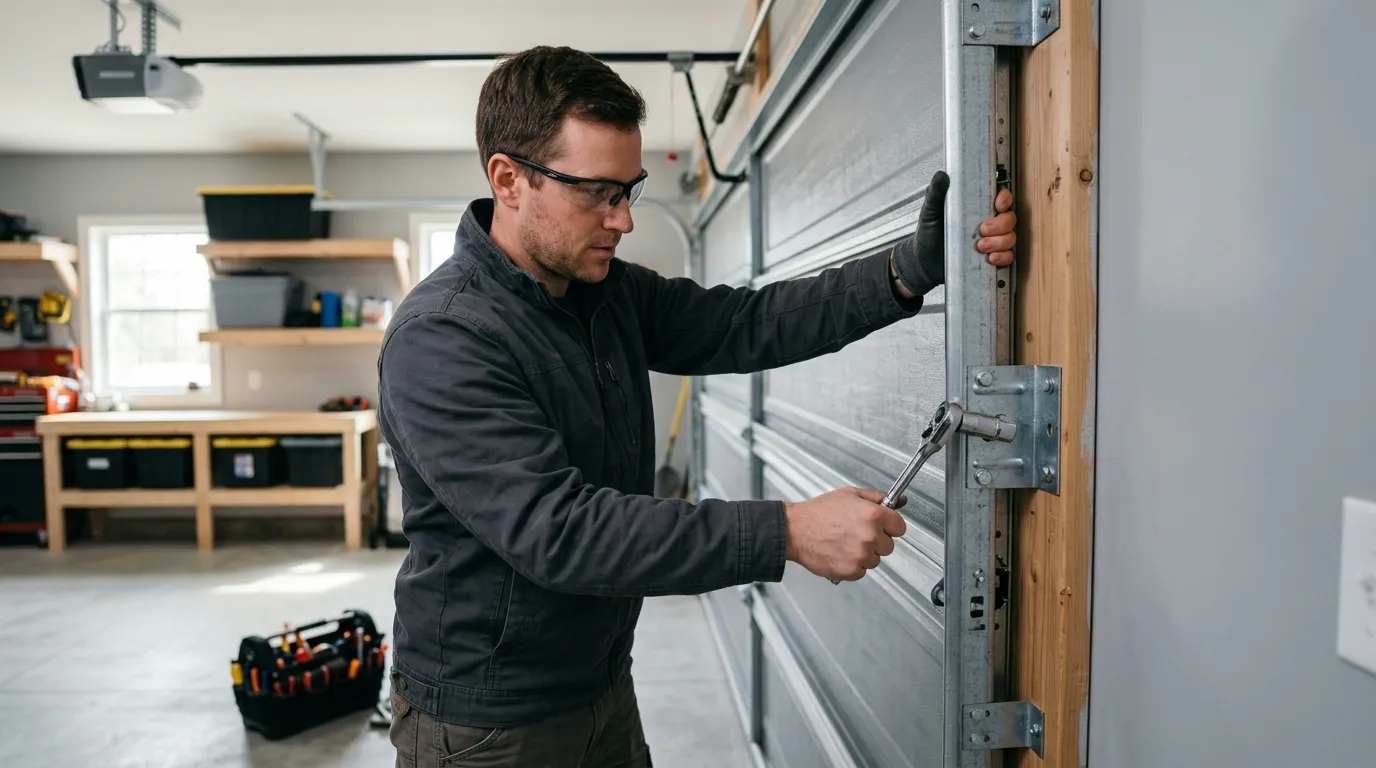
Garage Door Repair
Springs, cables, tracks, rollers, and openers fixed by a tech who explains the problem before touching anything.
Learn more →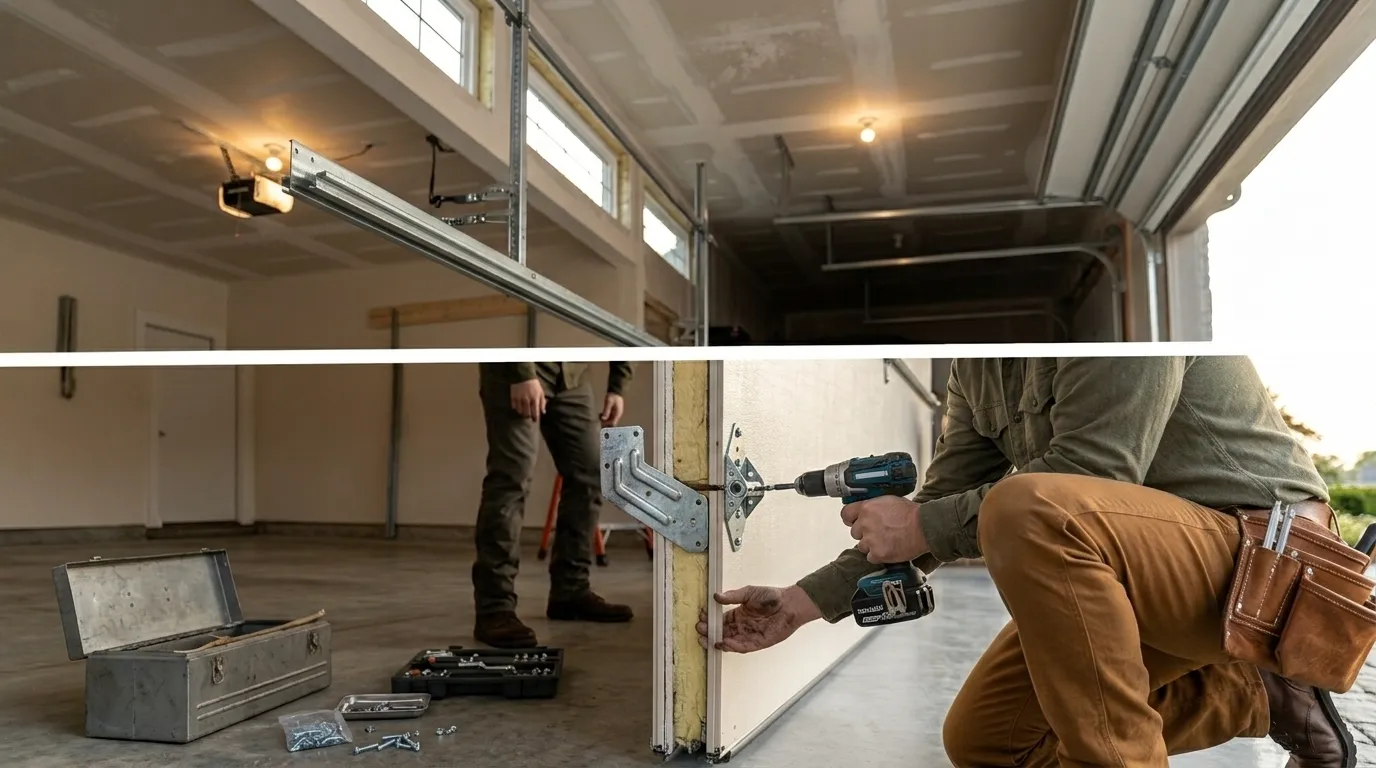
Garage Door Installation
New sectional doors sized and installed for the housing stock actually built in this area.
Learn more →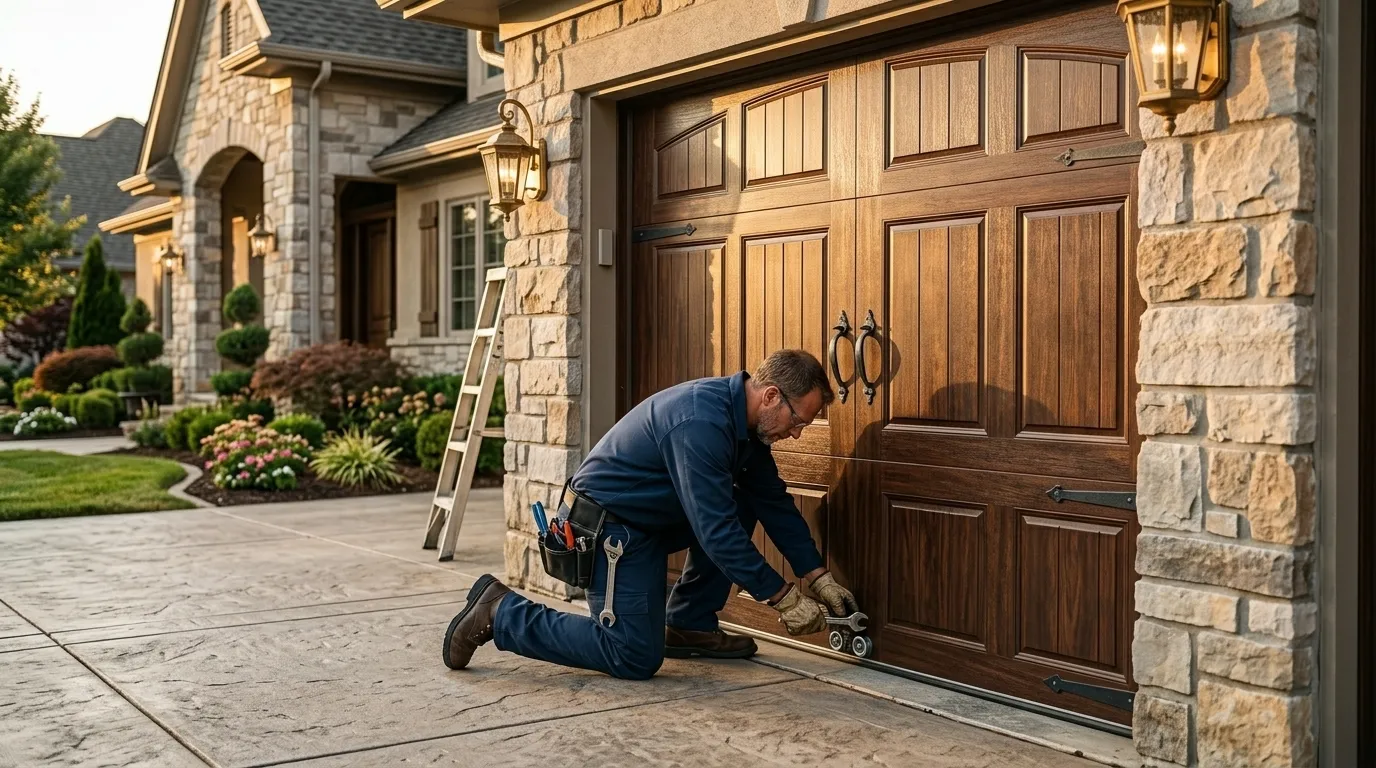
Garage Door Service
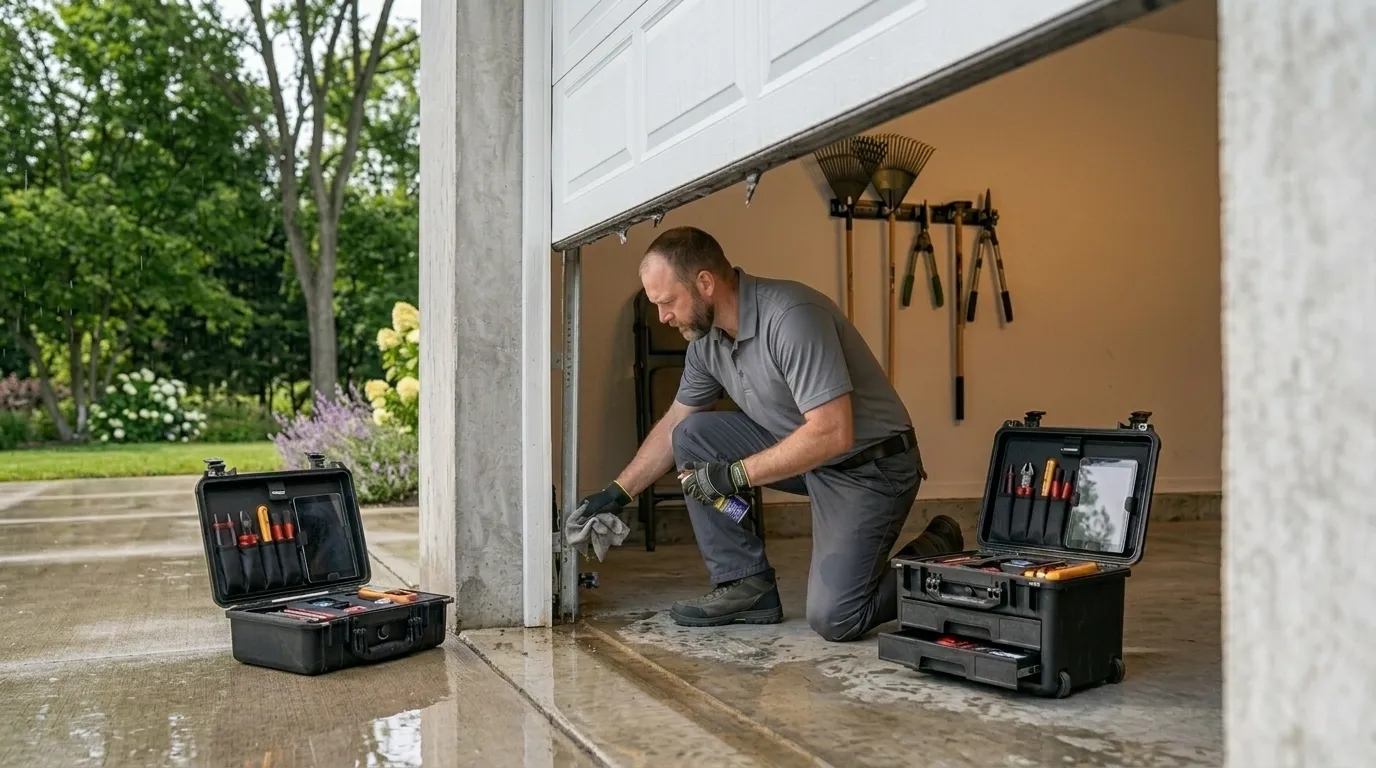
Tune-ups, lubrication, and safety checks that catch a small problem before it becomes a service call.
Learn more →Frequently Asked Questions
Can I just push the door back onto the track myself?
You can try to reseat a roller that's barely off, but if the track itself is bent or a bracket has pulled from the wall, forcing the door back on can bend it worse or drop it on you. If the door looks crooked when it's halfway up, stop and call rather than push.
Is this a spring problem or a track problem?
If the door racks sideways as it opens or closes, suspect the spring or cable on one side first - uneven lift throws the door against the track even when the track itself is straight. A tech can usually tell the difference in a couple of minutes by watching the door cycle.
Does the mild climate here mean less maintenance?
It means less weather-driven damage, not less aging. Hardware here fails from decades of daily cycling rather than freeze-thaw stress, so an older door still needs its brackets and rollers checked even without a harsh winter to blame.
My house is from the 1970s - is the track original?
On a lot of houses built in that median 1976 window, yes, at least some of the track hardware is original or close to it. Original brackets from that era are more likely to have been adjusted or redrilled over the years, which is often where the misalignment starts.
Have a Door That Needs a Second Opinion?
Call and describe what it is doing - we will tell you what it likely is.